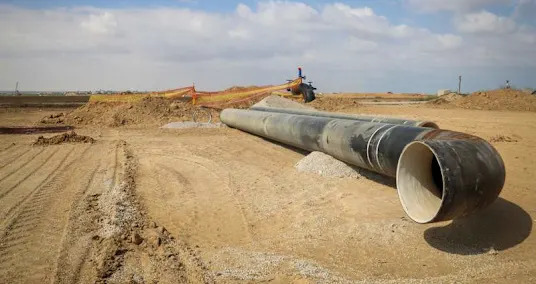
The post came in reply to a post from the United Nations Relief and Works Agency (UNRWA), saying that freshwater supplies in Gaza were "severely limited and polluted."
Gaza is receiving over 70,000 cubic meters of water per day, the Coordinator of Government Activities in the Territories (COGAT) claimed in an X/Twitter post on Sunday.
The post came in reply to a post from the United Nations Relief and Works Agency (UNRWA), saying that freshwater supplies in Gaza were "severely limited and polluted," due to a collapse in sewage infrastructure.
COGAT described UNRWA's claims as being "false narratives."
COGAT coordinates Gaza water line repair
"The facts speak for themselves," COGAT said. "When a water line issue was reported last week, we coordinated a rapid repair to restore full functionality immediately."
COGAT also said that there were four active pipelines leading into Gaza: Nahal Oz, Bani Suheila, Birkat Sa'id, and the Emirati line.
"While local groundwater faces challenges, we continue to repair infrastructure, even during combat, to ensure civilians access to safe, potable water," COGAT claimed.
LATEST POSTS
- 1
 Unwinding History's Secrets: Looking for the Response to Antiquated Human advancements
 - 2A NASA spacecraft orbiting Mars may be dead
- 3Israel's ban on unsupervised reporters in Gaza causes strategic harm to legitimacy
- 4Astounding Treehouses All over the Planet
- 5Only 30% of young people in Israel optimistic about future, Aluma survey reveals


- Director Emerald Fennell explains why "Wuthering Heights" has quotation marks around the title
- 5 Destinations Where Airfare Is Dropping The Most For Spring 2026, Per Dollar Flight Club Analysis
- Vote in favor of your Favored kind of footwear
- 7 Powerful Techniques to Boost Efficiency with Your Cell Phone: A Far reaching Guide
- OpenAI launches ChatGPT Health to connect medical records, wellness apps
- Collins Foods to offload 20 Taco Bell outlets in Australia
- 'The Golden Bachelor' Season 2 finale: How to watch tonight, start time, where to stream and more
- Army commander convicted of Guinea stadium massacre dies in prison
- Should you get an RSV vaccine this fall? What to know and where to get a shot