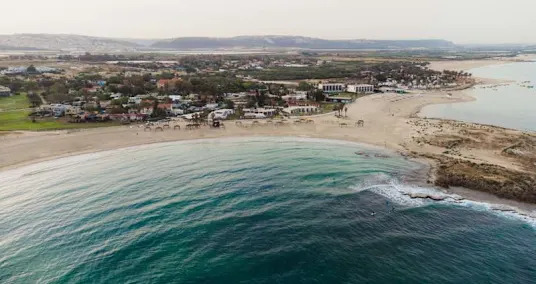
The discovery was made in an ancient shipwreck in the Dor Lagoon near the Carmel Coast, where archaeologists recovered nine pieces of unprocessed iron known as “blooms.”
Researchers from the University of Haifa said Wednesday that an underwater excavation off Israel’s northern Mediterranean coast uncovered what they described as the earliest known cargo of raw iron transported by ship, dating back around 2,600 years, Xinhua reported.
The discovery was made in an ancient shipwreck in the Dor Lagoon near the Carmel Coast, where archaeologists recovered nine pieces of unprocessed iron known as “blooms.” According to the university, the find provides direct evidence of how iron was transported in its earliest commercial stages.
The material was preserved in its original form, having solidified directly in a smelting furnace without undergoing forging or further refinement. Researchers said this distinguishes the cargo from later iron artifacts that typically show signs of shaping or tool-making.
Unlike copper and bronze, which could be melted into liquid form in ancient production processes, iron was heated with charcoal to produce a solid, porous mass. That mass was generally hammered to remove impurities and create denser material suitable for tools and implements.
The recovered blooms showed no indication of that secondary processing stage, suggesting they were transported immediately after production.

Earliest iron shipment discovered in ancient Mediterranean wreck
To determine the age and condition of the cargo, researchers conducted microscopic and chemical analyses.
Radiocarbon dating was also carried out on charred wood embedded in one of the pieces, helping confirm the timeline of the shipment. The findings were published in the journal Heritage Science.
Researchers said the cargo indicates that iron was being moved in raw form from production sites to other locations for further processing, pointing to a level of specialization in ancient manufacturing and trade networks in the Mediterranean.
The University of Haifa said the discovery provides new insight into early iron production and distribution practices in the region.
LATEST POSTS
- 1
 I watched the buzzy new AI documentary — and left feeling both hopeful and terrified
 - 2Smooth out Your Funds: Cash The board Simplified
- 375% of US adults may meet criteria for obesity under new definition, study finds
- 4Josh Duhamel's secret to the good life at 53? Wolverine peptides, ditching Hollywood and having another baby.
- 5German state railway loss widens, passengers warned of trouble ahead





- Sources: IDF does not actually know how many ballistic missiles Iran has left
- Record-breaking flu hospitalizations in New York in a single week: Health officials
- Coca-Cola Co. and bottlers to invest in South Africa operations
- $1,000 bribes, Mormon momfluencer mixers and making content to get plastic surgery: The wildest things I learned reporting my book
- The most effective method to Alter Your Savvy Bed for A definitive Rest Insight
- Sahel coups push Africa to top of global democratic declines, report finds
- Satellite constellations could obscure most space telescope observations by late 2030s: 'That part of the image will be forever lost'
- Gulf countries continue to face Iran attacks as criticial energy infrastructure at risk
- NASA begins the countdown for humanity's first launch to the moon in 53 years