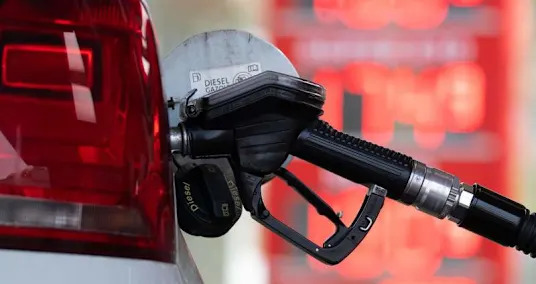
Germany's new price regulation for petrol stations is due to take effect on April 1, a spokesman for the Economy Ministry confirmed on Monday.
In response to soaring oil prices as a result of the war in the Middle East, the German government last week passed a bill to limit petrol stations to raising prices once a day.
The bill was signed by President Frank-Walter Steinmeier on Friday and must be published in the Federal Law Gazette before taking effect.
The spokesman said the "parties involved have asked us to work towards the legislation coming into force on April 1 to ensure a smooth implementation."
The bill is therefore to be published in the Federal Law Gazette on Tuesday before coming into force on Wednesday, the spokesman added.
Under the new rule, petrol stations will be allowed to raise their prices only once a day, at midday.
The aim is to limit price fluctuations and ensure greater transparency. Price reductions, however, can still be made at any time.
The rule is modelled on a similar law in Austria. Critics and consumers have warned that it will be insufficient to restrict prices at the pump.
LATEST POSTS
- 1
 One perk to marrying Richard Marx later in life? 'We don't have time' for stupid arguments, says Daisy Fuentes.
 - 2You finally got a doctor's appointment. Here's how to get the most out of it
- 3Rediscovering Euphoria: Individual Accounts of Conquering Despondency
- 4New study measures titanium in Apollo rock to uncover Moon’s early chemistry
- 5IDF strikes terror infrastructure across Iran, attack reported on Kashan airport



- Grasping Various Kinds of Local misdemeanors
- Why this Tennessee special election has the 'whole world' watching
- Extraordinary Picks for Home Apparatuses: Making Life Simpler
- Pick Your #1 Japanese Food
- Grasping Wrongdoings and Crimes: A Correlation
- 'The Real Housewives of Rhode Island' 1st teaser trailer unveiled: Which Bachelor Nation star is part of the cast? And when does it premiere?
- Audits of the Top Science fiction Movies This Year
- Germany ready to assist Syria's reconstruction, says foreign minister
- Chinese construction workers in Israel: 'I’d rather be bombed than live in poverty'