When you buy through links on our articles, Future and its syndication partners may earn a commission.

CAPE CANAVERAL, Fla. — There was a little potty problem on NASA's Artemis 2 moon ship.
Within hours of launching four astronauts on NASA's Artemis 2 mission around the moon, its crew reported a glitch in what may have been the most anticipated new creature comfort of their Orion spacecraft: their space toilet.
Artemis 2 mission specialist Christina Koch noted an issue starting up part of the Orion capsule's toilet — which NASA calls the Universal Waste Management System — that deals with urine collection.
"The toilet fan is reported to be jammed," NASA spokesperson Gary Jordan said during live mission commentary. "Now the ground teams are coming up with instructions on how to get into the fan and clear that area to revive the toilet for the mission."
Norm Knight, NASA's director of flight operations, told reporters here at the Kennedy Space Center that the malfunction was due to a controller issue on the toilet. But NASA confirmed astronauts could still use the space commode to poop, just not urinate, though engineers were working to restore it to full service.
"In the meantime they're getting their contingency — their backup waste management capabilities specifically for urine," Jordan said. "The fecal collection of the toilet, that specific capability, can still be used with the waste management system aboard Orion."

A few hours after Koch reported the toilet issue to Mission Control, flight controllers walked her through a series of steps to try and fix it.
"Houston, Integrity, good checkout," Koch said after trying the fix.
Then, some relieving news.
"Happy to report that toilet is go for use," Mission Control's Capcom Amy Dill radioed Koch. "We do recommend letting the system get to operating speed before donating fluid, and then letting it run a little bit after donation."
"We are cheers all around, and we will do that," Koch replied.
It does sound like at least one crewmember used a contingency bag before the fix. Koch reported that one CCU, or Collapsible Contingency Urinal, was full and needed to be emptied overboard. Dill radioed up instructions on the best time for that dump, and all was well.
That may be a relief for the Artemis 2 astronauts, in more ways than one. NASA's Apollo astronauts did not have the luxury of a toilet when they flew to the moon in the 1960s and 1970s. They peed and pooped in plastic bags, then stowed the solid waste and vented urine overboard into space.
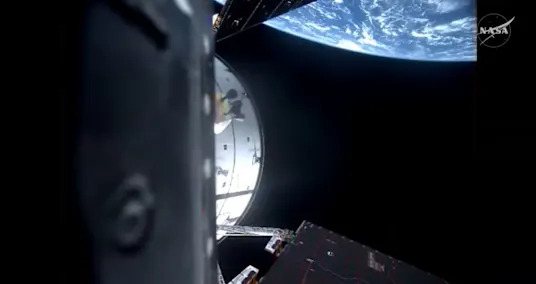
The toilet aboard Orion is a smaller, more compact version of the bathrooms on the International Space Station. It's built into the floor of the Orion capsule and allows Artemis 2 astronauts some privacy while taking care of business. While the Orion spacecraft is larger than NASA's Apollo capsules, it's still cramped — the interior has been compared to that of two SUVs.
"The one place that we can go on our mission where we can feel like we're alone for a moment," Artemis 2 mission specialist Jeremy Hansen of the Canadian Space Agency said of the toilet in a video overview.
The toilet is technically known as the "hygiene bay" and has about as much room as the bathroom on a passenger jet, according to Lockheed Martin, which built the Orion spacecraft for NASA. It's part of Orion's systems to support an astronaut crew — NASA's uncrewed Artemis 1 test flight in 2022 didn't carry one — but there are backup systems aboard, like those Apollo-era bags, if they're needed.
The Artemis 2 astronauts use foot restraints to help stay in place while using the toilet, which uses airflow to draw solid waste away from the body and into a collection device. For urine, each astronaut has his or her own personal funnel to use, with a fan that draws the urine into a tank.
"That's absolutely an important component on this ship," Blaine Brown, Lockheed Martin's director of Orion spacecraft mechanical systems, told Space.com in an interview. "You can call it a luxury. Some call it a necessity."
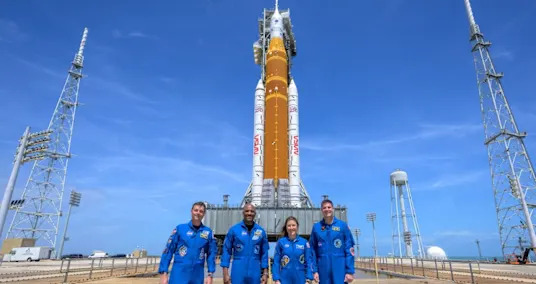
NASA's Artemis 2 mission is a historic test flight to send astronauts on a 10-day trip around the moon. It's the first crewed flight of the Orion spacecraft and the Space Launch System rocket that launched them on their way.
The mission is the vanguard of NASA's Artemis program, which aims to land astronauts on the moon by 2028 and begin a permanent moon base by 2032.
Editor's note: This story was updated at 12:15 a.m. EDT on April 2 to reflect the successful repair of the toilet on Artemis 2's Orion spacecraft.
LATEST POSTS
- 1
 A definitive Manual for Internet Mastering and Expertise Improvement
 - 2Iran slams UN nuclear watchdog for failing to condemn Bushehr attacks
- 3I tried a macho, creatine-loaded cereal “for men.” Did I mention I'm a woman?
- 4Cocoa Prices Sink on Favorable Crop Conditions in West Africa
- 5Limited Rain Chances in Brazil Boost Coffee Prices




- Reports: Germany plans expansion of foreign intelligence powers
- 4 Excellent Remote Headphones of 2024
- US EPA will reassess safety of herbicide paraquat, says its chief
- Stunning new James Webb Space Telescope images reveal 'hidden' stars being born
- Who is behind Al-Majd, the Israeli-linked evacuation group sending Gazans to South Africa?
- Discussion on deployment of foreign troops ongoing, two sources tell 'Post'
- Rick Steves Doesn't Want You Overlooking This Food Spot While In France
- The Best Computer games for Multiplayer Fun
- Huge solar flare no threat to Artemis 2 astronaut launch to the moon, NASA says